

Degenerative Disc Disease & Chronic Lower Back Pain
Understanding Disc-Related Back Pain & Emerging Regenerative Approaches
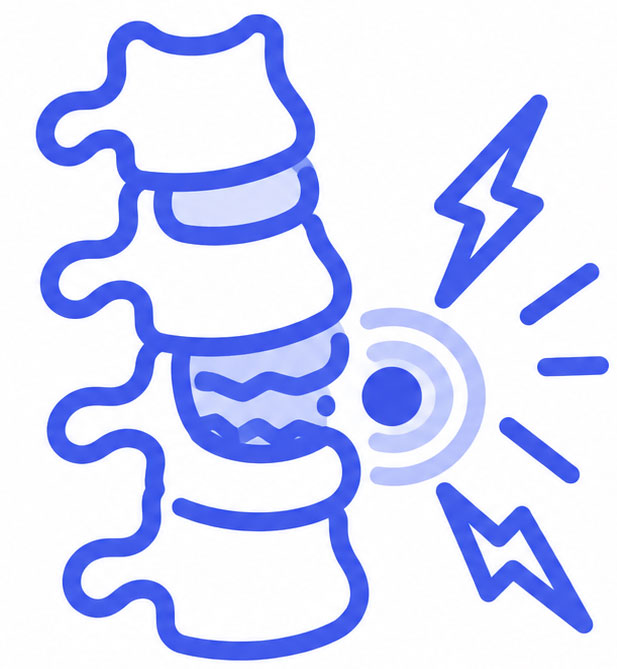
Degenerative disc disease describes age-related and wear-related changes in the intervertebral discs, the cushions that sit between the vertebrae of the spine. As discs lose water, height and structure, they can become a source of chronic lower back pain, stiffness and reduced mobility.
Alongside physiotherapy, pain management and surgery, researchers are investigating whether mesenchymal stem cells (MSCs) injected into the disc may help reduce pain and support disc health. Some studies have reported encouraging results, while larger trials have produced mixed findings.
Why Degenerative Disc Disease Treatment Matters
Lower back pain is one of the leading causes of disability worldwide, and disc degeneration is among its most common underlying causes. For many people, it affects work, sleep, exercise and everyday movement.
Current treatments focus on managing pain and restoring function. When conservative care does not help, options such as spinal fusion or disc replacement may be considered, but these do not restore the disc's natural biology.
This gap has made the intervertebral disc an important focus for regenerative medicine research, particularly approaches that aim to address the degenerative process itself.
Understanding Degenerative Disc Disease & Regenerative Medicine
Each disc has a soft, gel-like centre called the nucleus pulposus, surrounded by a tougher outer ring called the annulus fibrosus. Over time, the number of healthy disc cells falls, inflammation increases and the disc gradually loses its ability to absorb load.
Regenerative medicine research is investigating whether MSCs can calm this inflammatory environment, support the remaining disc cells and help preserve disc structure.
MSC injections into the disc have shown improvements in pain and function in some phase 2 trials. Late-stage results have been mixed, and no cell therapy is yet approved as a standard treatment. Current evidence for cell-based products is stronger than for exosomes.
At a Glance
How it works
How Regenerative Medicine Is Being Studied for Degenerative Disc Disease
Researchers are investigating whether cells delivered directly into a degenerated disc can reduce inflammation, support the disc's own cells and slow further breakdown.
Clinical studies typically measure pain, physical function and changes seen on MRI over one to two years.
01
Reducing Disc Inflammation
MSCs release signalling molecules that are being studied for their ability to calm the inflammatory environment linked to disc-related pain.
02
Supporting Disc Cells
Researchers are examining whether MSCs can help the disc's remaining cells survive and maintain the tissue around them.
03
Preserving Disc Matrix
Studies are exploring whether cell therapy can support the production of the water-binding molecules that keep a disc cushioned and flexible.
05
Measuring Functional Recovery
Clinical trials assess pain scores, disability measures and everyday function to determine whether any improvement is meaningful and lasting.
04
Investigating Pain Pathways
Degenerated discs can grow new nerve endings that contribute to pain. Researchers are studying whether regenerative approaches influence these pain signals.
06
Building Clinical Evidence
Larger, well-controlled trials are needed to confirm which patients benefit, the most suitable cell types and doses, and long-term outcomes.
Visual flow

Disc Degeneration
Loss of disc cells, water and height

Imaging & Assessment
MRI review and specialist evaluation

Personalised Approach
Evidence-led discussion of suitable options
Who May Consider Degenerative Disc Disease Treatment?
Back pain has many possible causes, and not every case is related to the disc. Treatment decisions depend on diagnosis, imaging, symptoms, previous treatments and overall health.
People who may seek specialist information about disc-related back pain and emerging regenerative approaches include:
People Living With Chronic Lower Back Pain
Individuals whose long-term back pain has been linked to disc degeneration on imaging and clinical assessment.
Those Who Have Not Responded to Conservative Care
People who have tried physiotherapy, exercise and pain management and want to understand other options before considering surgery.
Individuals Interested in Disc Regeneration Research
People who want to understand what clinical trials have shown about cell-based approaches for disc degeneration.
Is Regenerative Treatment Right for You?
A specialist evaluation, including a review of recent MRI scans, should always come before considering any regenerative approach for back pain.
The Journey of Disc Degeneration Research
From Understanding the Disc to Cell-Based Therapies

Understanding Disc Structure
Research established how the nucleus pulposus and annulus fibrosus work together to absorb load and allow movement.
Linking Degeneration to Pain
Scientists identified inflammation, nerve ingrowth and loss of disc cells as key contributors to disc-related pain.

Laboratory & Preclinical Studies
Researchers tested whether stem cells could survive in the disc and support its tissue in laboratory and animal models.

Human Clinical Trials
MSC injections progressed into human trials, with encouraging phase 2 findings and mixed late-stage results.
Ready to Learn More?
Disc regeneration research continues to evolve, and results vary between studies. Understanding what has been shown, and for which patients, can help you make an informed decision about your care.
Hear From the Experts Advancing Disc Research

Professor Interviews
Hear spine surgeons and researchers discuss cell-based strategies for disc regeneration and where the evidence currently stands.


Medical Podcasts
Read researchers' recommendations on moving disc cell therapies from the laboratory into clinical practice.

Patient Perspectives
Understand the lived experience of persistent pain and why recovery involves more than one treatment.

Clinical Discussions
Review a recent double-blind, randomised trial of MSCs injected into degenerated discs.
Continue the Conversation
Disc regeneration research is progressing, but not every approach is ready for routine clinical use. Understanding the evidence, the risks and the regulatory status of a treatment is an important part of making an informed decision.